#32. Spaces For Jewelry Making Enthusiasts → Strategy Used By Van Cleef & Arpels®
Listen to the customer retention strategy used by Van Cleef & Arpels®.
You’ve probably heard of Van Cleef & Arpels, the renowned jewelry brand founded in France in 1906.
Listen to host André Brathwaite share the backstory of its founders, Alfred Van Cleef & Charles Arpels, who turned their passion into a lasting brand that uses a customer retention strategy: Offering hobby-driven places and activities through its L’Ecole, School of Jewelry Arts.
The opinions expressed are solely those of Forms of Recreation and do not necessarily reflect the views of any brand mentioned. We encourage you to check their corresponding websites for further information.
-
Episode 32
Jewelry Making → Alfred & Charles | Van Cleef & Arpels®
Most jewelry brands think loyalty is earned through exclusivity.
Private viewings.
Closed doors.Van Cleef & Arpels took a different path.
Instead of guarding knowledge,
they gave it away.They built places where customers could return
without buying anything—
to learn, to practice, to observe jewelry
as a craft, not a commodity.That decision didn’t just increase retention.
It increased customer lifetime value.Because if Van Cleef & Arpels had treated jewelry
as something you simply acquire,
they would’ve become another luxury house—
visited once, admired briefly, then replaced.Instead, they gave people something to return to.
____
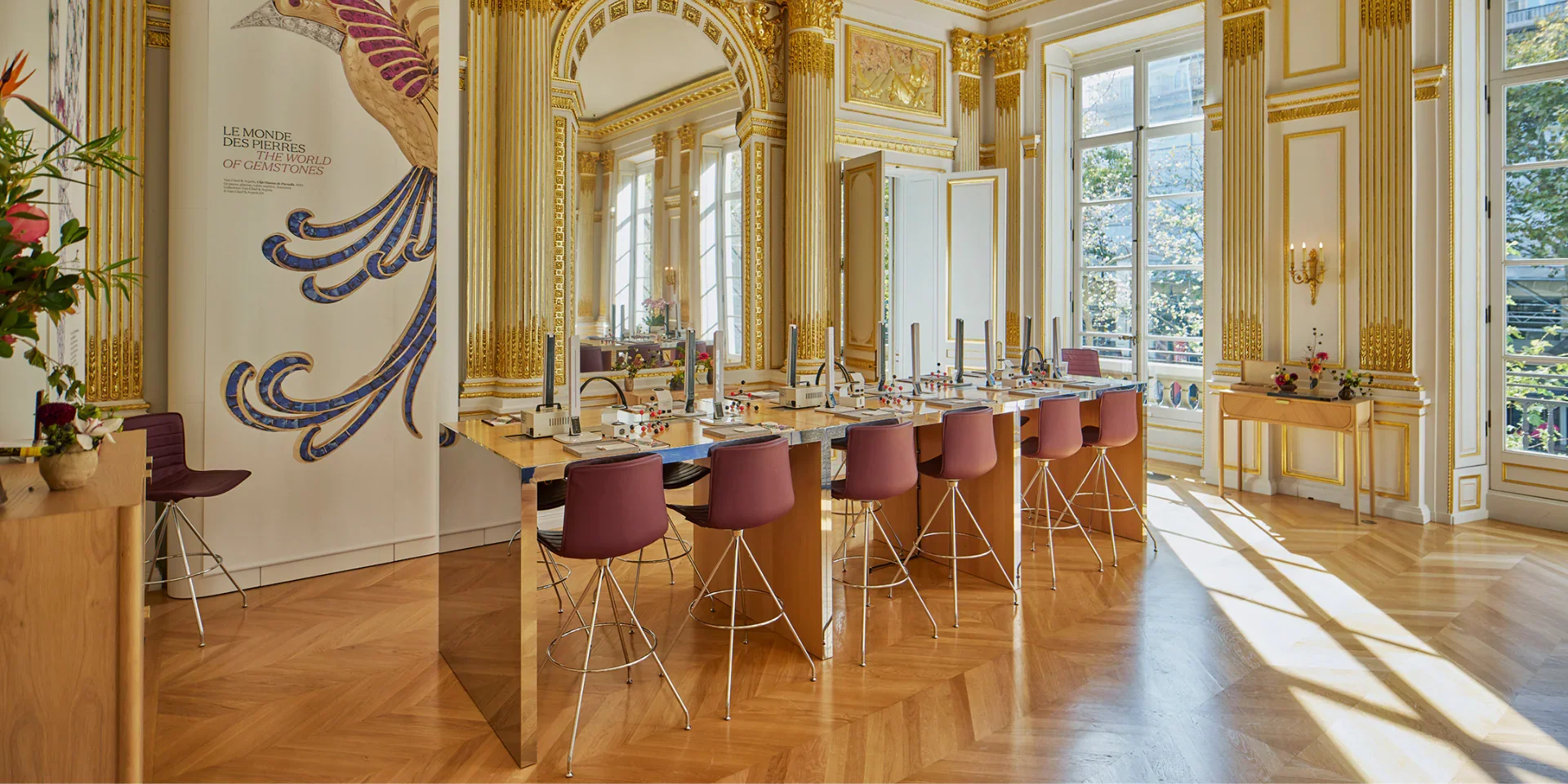
Picture a long table.
Tools laid out neatly.
A magnifying glass.
Loose stones.You hear the faceting machine turn on.
You’re not here to admire.
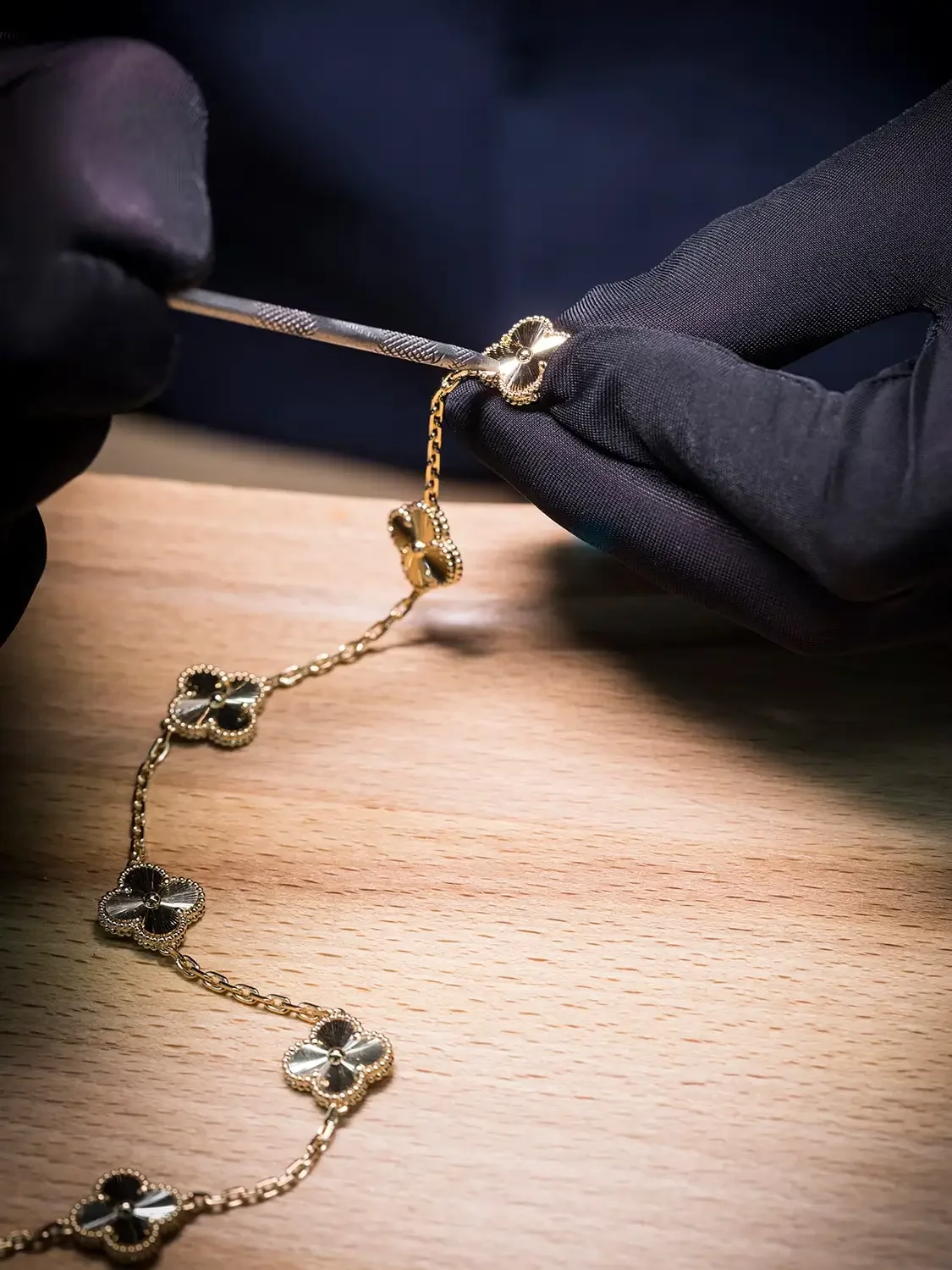
You’re here to learn.How gold bends.
How stones are cut.
How patience trains your eye.Jewelry making takes time.
Every movement leaves evidence.
Every shortcut shows.It’s your turn now—
but remember:You can’t rush a clasp.
You can’t push a gem.
You can’t force harmony
between materials that resist control.This hobby doesn’t ask you
to consume beauty.It asks you to understand it.
To respect the hours hidden
inside a finished piece.That shift—
from admiration to comprehension—
changes how people relate to objects.Once you understand craft,
you don’t walk away.You return.
That belief—
treating jewelry as a story, not a display—
is exactly how Van Cleef & Arpels was built.___
In 1895 in France, Alfred Van Cleef married Estelle Arpels, daughter of a gemstone trader.
In addition to love, their marriage didn’t just unite families.
It united skill sets.Alfred Van Cleef
was trained as a gemstone cutter.Salomon Arpels. Estelle’s brother, later known as Charles Arpels—
came from a family deeply embedded
in the gemstone trade.Van Cleef understood precision.
Arpels understood sourcing.
Craft met commerce.
In 1906, Alfred and Charles, became partners and opened the first Van Cleef & Arpels boutique in the most coveted jewelry address in Paris.
They didn’t position jewelry as fashion.
They positioned it as knowledge made visible.
Van Cleef & Arpels became known
not just for elegance,but for meaning.
In 1916, they introduced pieces inspired by superstition—
including the Touch Wood collection—
rooted in the belief that touching wood
could ward off misfortune and invite luck.They translated cultural rituals
into fine jewelry.They also became known for technical innovation—
most famously the Mystery Set.A method of setting gemstones
so precisely
that no metal appears to hold them in place.Engineering concealed beneath beauty.
Which brings us to the strategy
most luxury brands still don’t understand.____
In 2012, Van Cleef & Arpels launched L’École,
the School of Jewelry Arts.Not a showroom.
Not a museum.
Not a sales floor.A school.
Not the traditional kind. Anyone could attend.
Some subjects are paid, some are free.You could study:
– Jewelry history
– Gemology
– Design
– Craft techniquesThey built physical locations—
Paris, Hong Kong, Shanghai, Dubai, New York—
not to sell jewelry,
but to teach beginners, collectors, and hobbyists
what lives behind each gem.This is where the strategy clicks.
Most luxury brands rely on scarcity
to drive return visits.Van Cleef & Arpels relied on education.
By giving people a way to participate—
to refine taste,
to deepen understanding,
to feel competent rather than impressed—
they created continuity.This is retention through education,
not incentives.L’École doesn’t push people
to want more jewelry.It doesn’t need to.
Because Van Cleef & Arpels continues to build relationships with people
who want to feel understood.____
Here’s the decision Van Cleef & Arpels made
that most brands avoid.They invested in places
where nothing had to be sold.They accepted lower short-term conversion
in exchange for long-term return.Most brands won’t do this.
They hoard knowledge.
They protect expertise.
They confuse mystique
with barriers to entry.And then they panic
when customers drift.Van Cleef & Arpels understood something deeper:
People don’t return to products.
They return to passions.You can reward customers for buying.
Or you can invite them into hobby-driven experiences
that makes the product matter.One creates short-lived transactions.
The other creates a long-lasting relationship.____
If loyalty disappears when points expire,
it was never loyalty. Give customers a reason to return: hobby-driven experiences.
Explore more
Globally admired brands are extending beyond the products they make. We at Forms of Recreation help discover handpicked spaces designed for refined hobbyists like you.