#36. Spaces For Nature Observers → Strategy Used by Swarovski Optik®
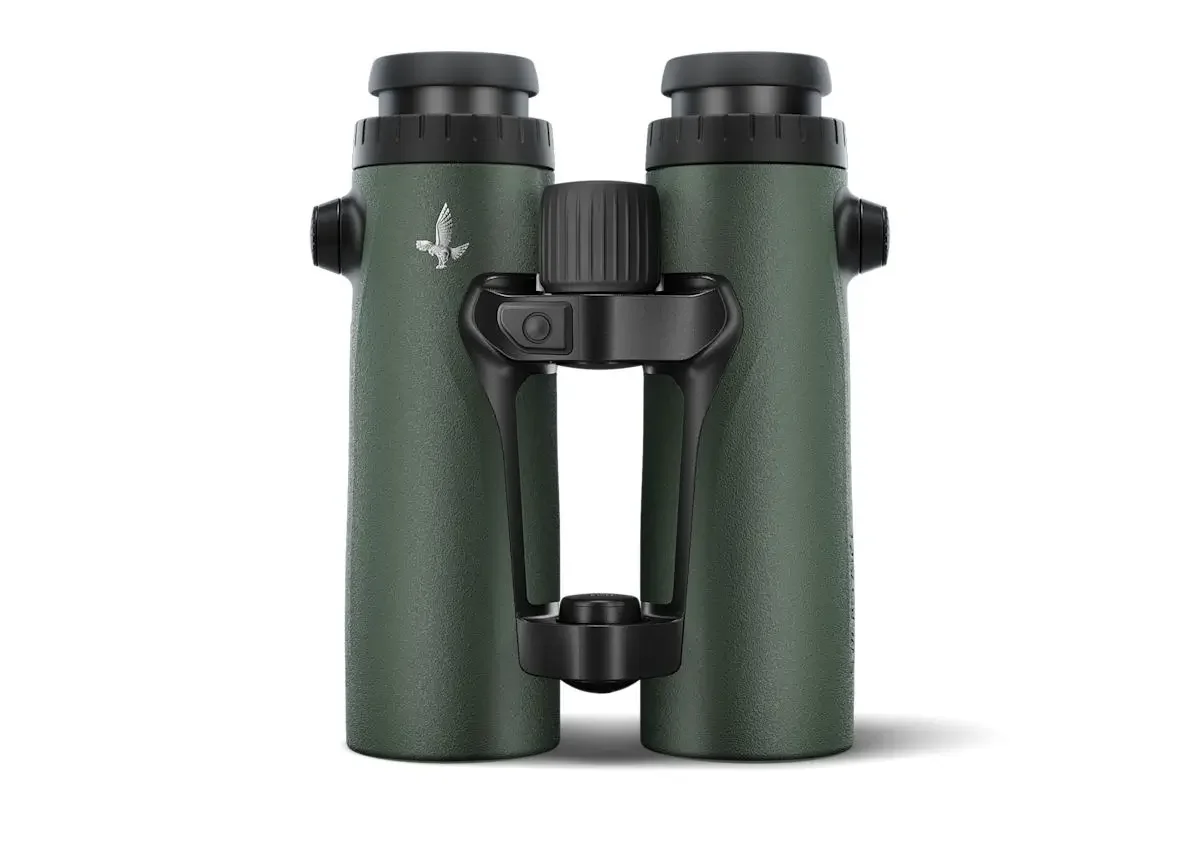
Listen to the customer retention strategy used by Swarovski Optik®.
Founders. You’ve probably heard of Swarovski Optik, the binoculars and scopes manufacturer founded in Austria in 1949.
Listen to host André Brathwaite share the backstory of its founder, Wilhelm Swarovski, who turned his passion into a lasting brand that uses a customer retention strategy: Hobby-driven experiences, including locations (Campex in Europe and Rainforest in Costa Rica), and activities (Swarovski Optik Events).
The opinions expressed are solely those of Forms of Recreation and do not necessarily reflect the views of any brand mentioned. We encourage you to check their corresponding websites for further information.
-
Episode 36
Nature Observing → Strategy Used By Swarovski Optik®
____
Most optics manufacturers compete on magnification.
Longer range.
More power.
Swarovski Optik chose a different path.
They refined clarity.
Then they created the environment for those seeking it.
They didn’t just build better binoculars.
They built better observers.
Because if optics are just tools,
customers upgrade to a different brand.
But if observation becomes a hobby—
a discipline—
an identity—
You don’t switch brands lightly.
That decision didn’t just bring in customers.
It built a reason to return.
____
Picture this.
You are outside,
at the edge of a forest,
at sunrise.
No notifications.
No playlist.
No rush.
Just your breath
and the sound of nature distance.
Raise binoculars slowly.
At first, you see movement.
Then you see detail.
Feather texture.
Wind direction.
Light reflecting on leaves.
Nature observation asks something from you.
Stillness.
You adjust focus.
And, you adjust your expectations.
Nature doesn’t perform on demand.
It reveals itself
to those who wait.
And once you learn to observe properly,
you don’t go back to casual glancing.
You seek clarity.
You seek precision.
You seek tools that don’t interrupt the moment.
That belief—
that seeing intently is a form of recreation—
is how Swarovski Optik was built.
____
Born in Austria in 1888,
Wilhelm Swarovski was the eldest son of Daniel Swarovski —
the man who built the crystal empire through precision glass cutting.
Which means that Wilhelm grew up around the refraction of light.
But his fascination wasn’t jewelry,
crystal figurines,
or chandeliers.
It was distance.
By the 1930s,
Wilhelm considered himself a hunter
and amateur astronomer.
Living in Austria,
surrounded by vast nature,
he spent his days off under alpine trees
and his nights observing the stars and planets.
His personal ambition was simple:
To be closer to the stars.
The problem?
The available optics weren’t good enough.
So, he did what obsessives do.
He started experimenting.
Wilhelm began grinding and polishing prisms and lenses at home.
It is said that he even used his wife’s silk stockings to polish them,
considering them a great way to achieve the smoothest finish.
His methods were unconventional,
but remember,
he was solving his frustration.
Unlike most hobbyists,
Wilhelm had access to something powerful:
the advanced glass production and technology
already used in his father’s crystal factories.
He leveraged that expertise
to develop a new prism fabrication and grinding process.
In 1935,
he produced his first 6x30 binocular prototype,
a personal instrument built to satisfy his own obsession.
World War II temporarily redirected him
to contribute to the production of military optics.
But even during that period,
Wilhelm’s focus remained consistent:
High-quality precision optics
for serious observation.
After the war,
that personal obsession matured into a company.
He founded Swarovski Optik in 1949.
He didn’t treat binoculars as accessories.
He treated them as an extension of the eye.
Wilhelm continued refining binoculars and spotting scopes
for outdoor conditions
until he passed away in 1962.
But he had already done something unusual.
He turned a personal hobby — stargazing —
into a precision optics company
built for people to engage in nature observation
for recreation or their profession.
____
Here’s the strategic shift most equipment brands miss:
If nature observation is a hobby,
you must create environments where it thrives.
Swarovski Optik didn’t stop at manufacturing.
They built participation.
First:
Swarovski Optik CAMPEX.
Not a retail outlet.
A test environment.
Customers are outdoors.
Field conditions.
Real terrain.
Actual light.
You don’t buy from a shelf.
You spend time with it in nature.
Then there’s the Swarovski Optik Rainforest in Costa Rica.
A long-term conservation initiative
protecting biodiversity.
This isn’t branding theater.
It’s ecosystem alignment.
Birders.
Hunters.
Wildlife observers.
The company invests in the environments
their customers care about.
That deepens their identity.
And then there are Swarovski Optik Events.
Guided excursions.
Birdwatching gatherings.
Hunting experiences.
Workshops.
These events do something subtle:
They connect the product to the hobby.
You don’t just own binoculars.
You use them—
with others who care about the same hobby you are into.
This creates a return loop:
Learn to observe better.
Experience clarity in the field.
Associate that clarity with the tool being used.
Return to get better.
It’s not about specs.
It’s about setting expectations.
Once someone experiences high optical clarity during a critical sighting—
a rare bird,
a distant stag,
a shooting star—
Downgrading feels like regression.
That’s customer retention.
CLOSING VERDICT — FORCE THE CHOICE (1–2 minutes)
Here’s the decision Swarovski Optik made
that most product brands avoid.
They created the conditions
for their customers to get better.
Not just buy better.
They invested in experiences.
In conservation.
In events.
In education.
Most equipment brands train buyers to compare numbers.
Swarovski Optik trains observers to refine their hobby.
And once someone identifies as a nature observer,
they protect that identity.
You can compete on features.
Or you can help strengthen an identity.
One leads to constant competition.
The other leads to a resilient community.
____
If loyalty disappears when points expire,
it was never loyalty.
Give customers a reason to return:
hobby-driven experiences.
Explore more
Globally admired brands are extending beyond the products they make. We at Forms of Recreation help discover handpicked spaces designed for refined hobbyists like you.