#35. Spaces For Chocolate Lovers → Strategy Used By Lindt®
Listen to the customer retention strategy used by Lindt®.
Founders. You’ve probably heard of Lindt, the chocolate manufacturer founded in Switzerland in 1845.
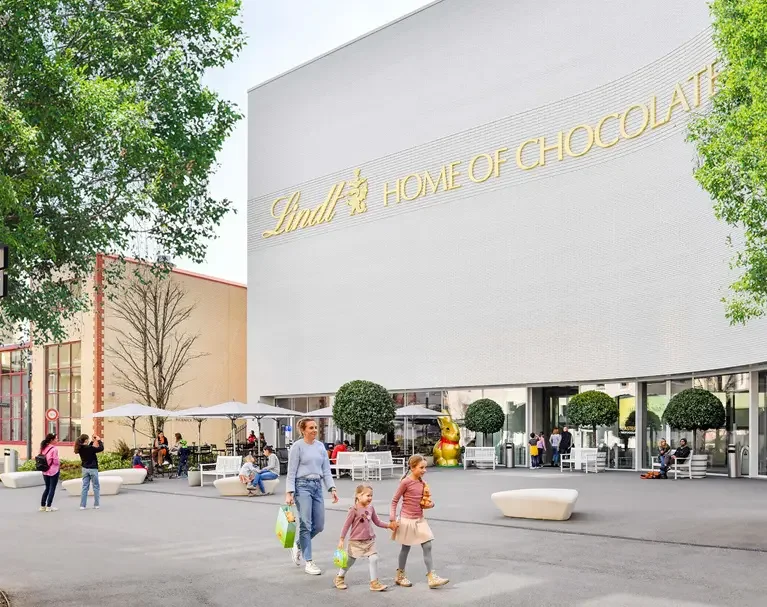
Listen to host André Brathwaite share the backstory of its founder, Rodolphe Lindt, who turned their passion into a lasting brand that uses a customer retention strategy: Hobby-driven experiences, including locations (Lindt House of Chocolate), and activities (Lindt Chocolateria Workshops).
The opinions expressed are solely those of Forms of Recreation and do not necessarily reflect the views of any brand mentioned. We encourage you to check their corresponding websites for further information.
-
Episode 35
Tea Brewing → Strategy Used By Lindt®
____
Most chocolate brands compete on sweetness.
Packaging.
Seasonal volume.Lindt took a different path.
They made chocolate smoother.
Then they made tasting slower.
They didn’t just improve texture.
They elevated attention.Because if Lindt had treated chocolate as candy,
it would’ve competed on sugar.Instead, it treated chocolate appreciation
as an experience for people with refined taste.And when customers learn to taste properly,
they don’t downgrade easily.That decision didn’t just build preference.
It built retention.
Because if Lindt had become a commodity, most chocolate brands do,
they would have been long forgotten.But after hearing this story, that’s not the case.
____
Picture yourself walking into the kitchen.
You open the cabinet above you.
And reach up for a chocolate bar.
Break off a square.
Don’t chew it.
Let it rest on your tongue.
Now wait.
Cocoa butter melts just below body temperature.
Flavor releases in stages.
First bitterness.
Then sweetness.
Then roasted depth.You begin to notice texture.
Is it grainy?
Or velvety smooth?Chocolate tasting isn’t indulgence.
It’s awareness.
Origin matters.
Roast matters.
Conching time matters.Ecuador tastes different than Madagascar.
70% behaves differently than 85%.Once you start noticing these variables,
you can’t go back to mindless snacking.You don’t just eat chocolate.
You evaluate it.
And once tasting becomes a hobby,
brand choice becomes important.That belief—
that chocolate can be studied, not just consumed—
is rooted in the obsession of one man.____
In 19th-century Switzerland,
chocolate was gritty.Chalky.
Uneven.
Difficult to melt.Enter Rodolphe Lindt.
He wasn’t from a dynasty of confectioners.
He was the son of a pharmacist.Curious.
Technically inclined.
Restless with imperfection.Chocolate at the time was closer to chemistry than dessert.
In 1879, in Bern at the age of 24,
he made a breakthrough that changed chocolate forever.Rodolphe started a small factory, selling hard and gritty chocolate like every other on the market.
Although the exact circumstances are unclear, the story goes that during his spare time, he used a roller machine to test if he could make chocolate smoother.
His brother, a pharmacist by trade, advised him to heat the roller machine and leave it running a bit longer.
Rodolphe left the machine running over a weekend while out on a hunting trip.
Whether accidental or deliberate,
what mattered was the result.Extended agitation and aeration—
what later became known as “conching”—
transformed the chocolate’s texture.It became smooth.
Velvety.
Melt-in-the-mouth.It wasn’t a marketing trick.
It was an accidental innovation.
Lindt guarded it carefully.
For years, competitors couldn’t replicate the texture.In 1899, he sold his factory and secret process to a family business.
The product scaled, but the obsession with refinement never left.
Rodolphe Lindt didn’t invent chocolate.
He perfected the experience of tasting it.
And that experience has manifested in different ways since then.
____
Here’s where the strategy sharpens.
If tasting is the hobby,
you need places to practice it.In 2020, Lindt opened the Lindt Home of Chocolate.
Not a store.
An immersive chocolate space.
Museum.
Research exhibition.
Production insight.
Tasting stations.Visitors don’t just stroll in to buy truffles.
They learn about:
– Cocoa origins
– Fermentation
– Roasting
– Conching
– Flavor layeringYou walk through the process
before you consume the result.Then there’s the Lindt CHOCOLATERIA.
Hands-on courses.
Tempering workshops.
Truffle-making classes.
Tasting seminars.Participants even wear aprons.
And learn snap tests.This is hobby reinforcement.
When customers understand technique,
their standards rise.Rising standards reduce substitution.
Lindt doesn’t rely on holiday sales.
It turns customers into practitioners.
Practitioners return.
Not because they crave sugar—
but because they respect what has been made.
CLOSING VERDICT — FORCE THE CHOICE (1–2 minutes)
Here’s the decision Lindt made
that most brands won’t.They invested in education
for a product people usually buy impulsively.They slowed down indulgence.
They taught customers to notice texture.
Most candy brands chase frequency.
Lindt deepened understanding.
And understanding locks in customer retention.
Because once someone develops taste,
they defend it.You can compete on price.
Or you can compete on refinement.
One creates transactions.
The other creates standards.
And standards create retention.
____
If loyalty disappears when points expire,
it was never loyalty.Give customers a reason to return:
hobby-driven experiences.
Explore more
Globally admired brands are extending beyond the products they make. We at Forms of Recreation help discover handpicked spaces designed for refined hobbyists like you.