#47. Spaces For Video Gamers → Strategy Used by Nintendo®
Listen to the customer retention strategy used by Nintendo®.
You’ve probably heard of Nintendo, the video game and electronics manufacturer founded in Japan in 1889.
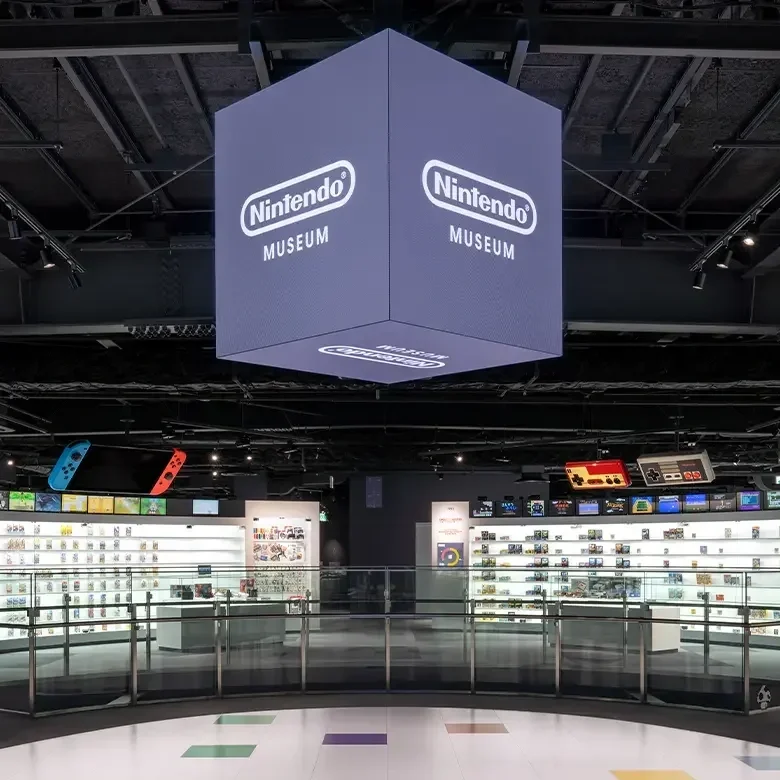
Listen to host André Brathwaite share the backstory of how founder Fusajiro Yamauchi turned his passion into a lasting brand that uses a customer retention strategy: hobby-driven experiences, including places (Super Nintendo World [Japan, Los Angeles, and Orlando], The Nintendo Museum, and Nintendo Stores) and activities (Play Nintendo Tour, Nintendo In-Store Events, and Nintendo Live).
The opinions expressed are solely those of Forms of Recreation and do not necessarily reflect the views of any brand mentioned. We encourage you to check their corresponding websites for further information.
-
Episode 47
Experiences For Video Gamers → Strategy Used by Nintendo®
____
Most entertainment companies compete on content.
More titles.
More releases.
More graphics.
Nintendo built something different.
They built on what it means to play.
Take note.
They didn’t just create games people play.
They created a connection between the virtual and physical worlds.
Because if games are only products,
customers move on when the next release arrives.
But if play moves from action into emotion,
People return for decades.
That decision didn’t just create fans.
It created generations of video gamers who keep coming back.
Because people don’t stay loyal to hardware alone.
They remain loyal to the experiences
that have shaped significant moments in their lives.
_____
Close your eyes.
Picture a living room late at night.
Your friends are over.
Snacks are within arm's reach.
A vintage Nintendo game console is turned on.
Controllers on the floor.
Why? The game freezes.
Someone slowly shares directions across the couch:
“Pull out the cartridge.”
“Blow into it.”
“Now, be careful not to spit into it.”
The cartridge goes back in,
and everyone starts playing again.
Nobody is multitasking.
Nobody is half-paying attention.
Everyone is inside the same world.
Video games ask something from you.
Timing.
Problem solving.
Coordination.
Patience.
Because, like in life. You’ll fail. Many times.
Over time, you start noticing something else.
Games become social architecture.
Inside jokes.
Rivalries.
Rituals.
You remember where you were
when you beat certain levels.
Who you played with.
Who watched.
Who stayed up too late.
The hobby stops being about the screen itself.
It becomes about the experience itself.
And once someone grows up this way,
they don’t just look for games.
They look for worlds worth returning to.
That belief—
that play is connective tissue, not disposable content—
is exactly how Nintendo survived for more than a century.
_____
Fusajiro Yamauchi was born in Japan in 1859,
By the age of 14, he inherited the family’s building materials business,
eventually taking full control while still in his late teens.
But Kyoto was changing.
And Fusajiro noticed something early:
People will always make time for play.
So in September 1889, he left the family trade behind
and opened a small shop in Kyoto called Nintendo Koppai.
Not as a video game company.
As a playing card company.
Specifically: hanafuda cards.
At the time, gambling was heavily restricted in Japan.
Traditional playing cards had been repeatedly banned by the government
because they were tied directly to gambling and organized betting.
But hanafuda cards operated differently.
Instead of numbers and suits,
such as spades, clubs, hearts, and diamonds,
they used:
Flowers.
Animals.
Nature scenes.
A clever way to bypass certain restrictions.
And of course,
that made them extremely useful for gambling.
Fusajiro himself frequently played card games with friends after work.
He understood the culture surrounding play.
And some of his most lucrative early customers
were high-stakes gambling dens reportedly operated by the Yakuza,
also known as the Japanese mafia.
Nintendo’s roots were never just manufacturing,
they were also based on social entertainment.
Fusajiro became known for producing high-quality handmade cards,
helping Nintendo dominate the hanafuda market.
But the bigger transformation came decades later through his great-grandson:
Hiroshi Yamauchi.
Hiroshi inherited the company in 1949 at only 21 years old.
And he quickly realized something uncomfortable:
Playing cards alone would not sustain Nintendo forever.
So, he experimented aggressively.
Taxi services.
Instant rice.
Love hotels.
Yes. Love hotels.
Hiroshi kept searching for the next big thing.
Then came one of the most important moments in Nintendo history.
In 1966, Hiroshi visited one of their playing card factories
and noticed a maintenance worker having fun with a toy:
A homemade extending claw.
The worker’s name was Gunpei Yokoi.
Instead of punishing him for wasting time,
Hiroshi saw potential.
He ordered Yokoi to turn the gadget into a product for the Christmas season.
That toy became the Ultra Hand.
A commercial success.
And more importantly, it changed Nintendo’s future.
Because Yokoi wasn’t just mechanically creative.
He also understood electronics.
Over time, he helped move Nintendo away from playing cards
and toward interactive entertainment.
That path eventually led to gaming consoles
and franchises that would redefine the industry.
What began as gambling
became something much larger:
gaming.
_____
Here’s what Nintendo understood early:
If gaming is the hobby,
you need places where people can physically experience the worlds together.
So they built them.
First: Super Nintendo World.
Not just amusement rides in cities such as Osaka, Los Angeles, and Orlando.
Immersive participation.
Visitors collect coins.
Complete challenges.
Interact physically with what they’ve seen virtually.
The line between player and environment disappears.
Then came the Nintendo Museum.
A space designed to preserve not just products,
but the culture of play itself.
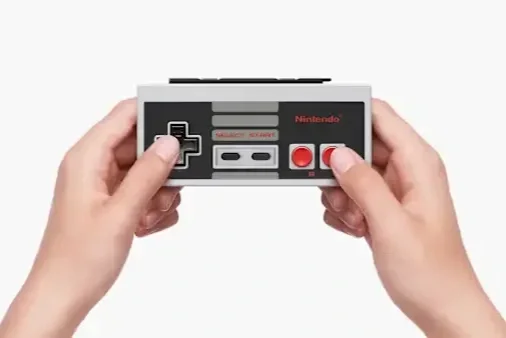
From gaming controllers to the latest prototypes.
The museum reinforces continuity across generations.
Parents introduce children to games they once played themselves.
Children introduce parents to what is coming next.
There are also Nintendo Stores.
Not traditional stores.
Gathering places.
Places where fans test games, attend launches,
and participate in events together.
Then come the activities.
Nintendo Live.
These are massive fan festivals held annually.
Competitive gaming.
Live music and stage performances.
Character experiences.
Community interaction.
Not passive fandom.
In-person interaction.
Then the Play Nintendo Tour.
a free, family-friendly pop-up event
that travels to major cities across the U.S. during the summer,
designed to bring Nintendo worlds directly into
public spaces and family environments.
That matters strategically.
Because Nintendo doesn’t rely only on new releases to maintain relevance.
They create recurring experiences around play itself.
This creates the return loop:
Play socially.
Form emotional memories around the experience.
Associate those memories with Nintendo worlds and characters.
Return to replay, revisit, and share the experience with others.
Most entertainment companies optimize novelty.
Nintendo optimizes for replayability.
That’s a fundamentally different retention strategy.
Because gaming becomes part of family tradition,
friendship,
or personal identity—
The result? Customers don’t age out easily.
_____
Here’s the decision Nintendo made
that other brands still resist.They prioritized play instead of complexity.
Nintendo repeatedly returns to something simpler:
Interaction.
Joy.
Challenge.
Shared experience.
And built physical spaces to support them.
Events.
Museums.
Communities.
Not to extend product sales alone.
But to strengthen what play means.
Because people rarely stay loyal to technology itself.
They stay loyal to the experiences that shaped them emotionally.
You can build games that people finish.
Or you can build on emotions people revisit for decades.
One creates temporary attention.
The other creates generational loyalty.
_____
If loyalty disappears when gaming consoles change,
it was never loyalty.
Give customers a reason to return: hobby-driven experiences
that makes people feel alive
Explore more
Globally admired brands are extending beyond the products they make. We at Forms of Recreation help discover handpicked spaces designed for refined hobbyists like you.