#39. Spaces For Whisky Enthusiasts → Strategy Used by Johnnie Walker®
Listen to the customer retention strategy used by Johnnie Walker®.
You’ve probably heard of Johnnie Walker, the spirit distiller brand founded in Scotland in 1820.
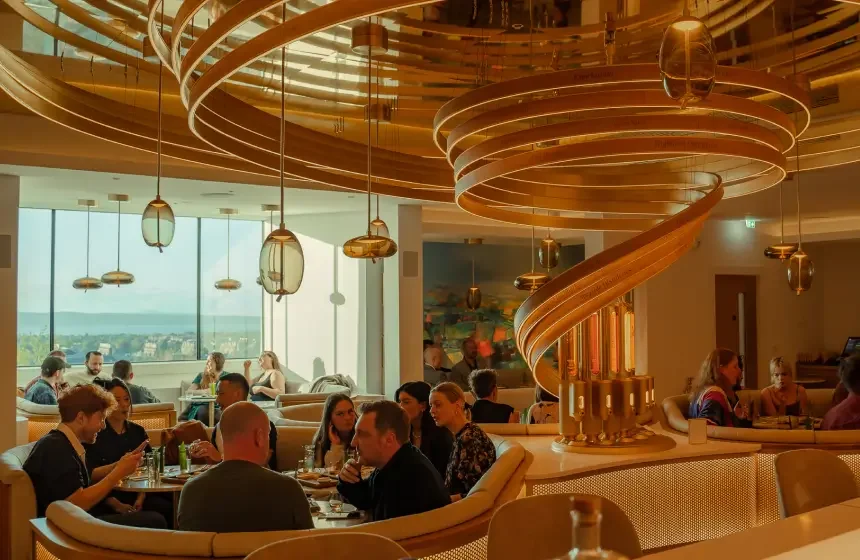
Listen to host André Brathwaite share the backstory of its founder, John Walker, who turned his passion into a lasting brand that uses a customer retention strategy: Hobby-driven experiences, including locations (Johnnie Walker Princes Street in Scotland), and activities (A Journey Of Flavor, Guided Tasting, among others).
The opinions expressed are solely those of Forms of Recreation and do not necessarily reflect the views of any brand mentioned. We encourage you to check their corresponding websites for further information.
-
Episode 39
Whisky Tasting → Strategy Used by Johnnie Walker®
____
Most whisky brands put all their effort into age.
12 years.
18 years.
25 years.Johnnie Walker took a different path.
They focused on consistency—
and then taught people how to taste it.They didn’t just sell bottles.
They built environments
where customers could learn
beyond what they drank.Because if whisky is just a drink,
customers switch brands.But if whisky tasting becomes a hobby?
They stay.
That decision didn’t just increase sales.
It increased retention.OPENING REFLECTION — HOBBY AS RECREATION (2 minutes)
Picture this.
You are sitting in a lounge with friends.
There’s a vibe.
A glass is in your hand.
Whisky. No ice.
You lift it slowly.
Before you taste,
you smell.Suddenly, the room gets quiet as notes start to appear.
Oak.
Smoke.
Something sweet you can’t quite name.You take a small sip.
Hold it.
And let it move across your tongue.
Whisky tasting isn’t about drinking.
It’s about being present.
Too fast, and you miss it.
Too casual, and it becomes unimportant.You begin to notice differences when whisky tasting is done right.
Regions.
Barrels.
Blends.It starts to separate what once felt identical
By learning to taste properly,
you don’t just consume whisky.
You study it.
And once you study something,
you return to it.
That shift—
from drinking to tasting—is exactly how Johnnie Walker was built.
____
Born in Scotland in 1805,
John Walker’s path was shaped early by loss.
In 1819,
when John was just 14 years old,
his father, Alexander, a farmer, passed away.The family couldn’t sustain the farm.
So they sold it—
the only option seen to
secure a future for John and his siblings.At 15,
John used his inheritance—
around £417—
to buy a small grocery store
in Kilmarnock.That decision mattered.
Because grocery taught him something.
Consistency.
At the time, whisky was unreliable.
Each batch tasted different.
Each distillery produced variation.Customers couldn’t depend on it.
But John had already developed a skill
that changed everything.He was a tea blender.
He understood how to combine leaves
to create a repeatable profile.So he applied the same logic to whisky.
He treated single malts
like tea—blending them
to create something consistent.A fun fact.
Despite building one of the most recognized
whisky brands in the world,
John Walker was—allegedly—
not a drinker.Business was good.
Why?
He wasn’t chasing indulgence.
Or indulging in his very own product.
He was obsessed with the process.
After his death,
his son,
Alexander Walker,
expanded the business.
He introduced the square bottle—
easier to transport,
less likely to break.And the slanted label—
angled at 24 degrees
to stand out on shelves.As the blends gained popularity,
customers simplified what they were asking for.
The original names—
like “Special Old Highland”—
were too long.So people started ordering differently.
“The red one.”
“The black one.”The company paid attention.
In 1909,
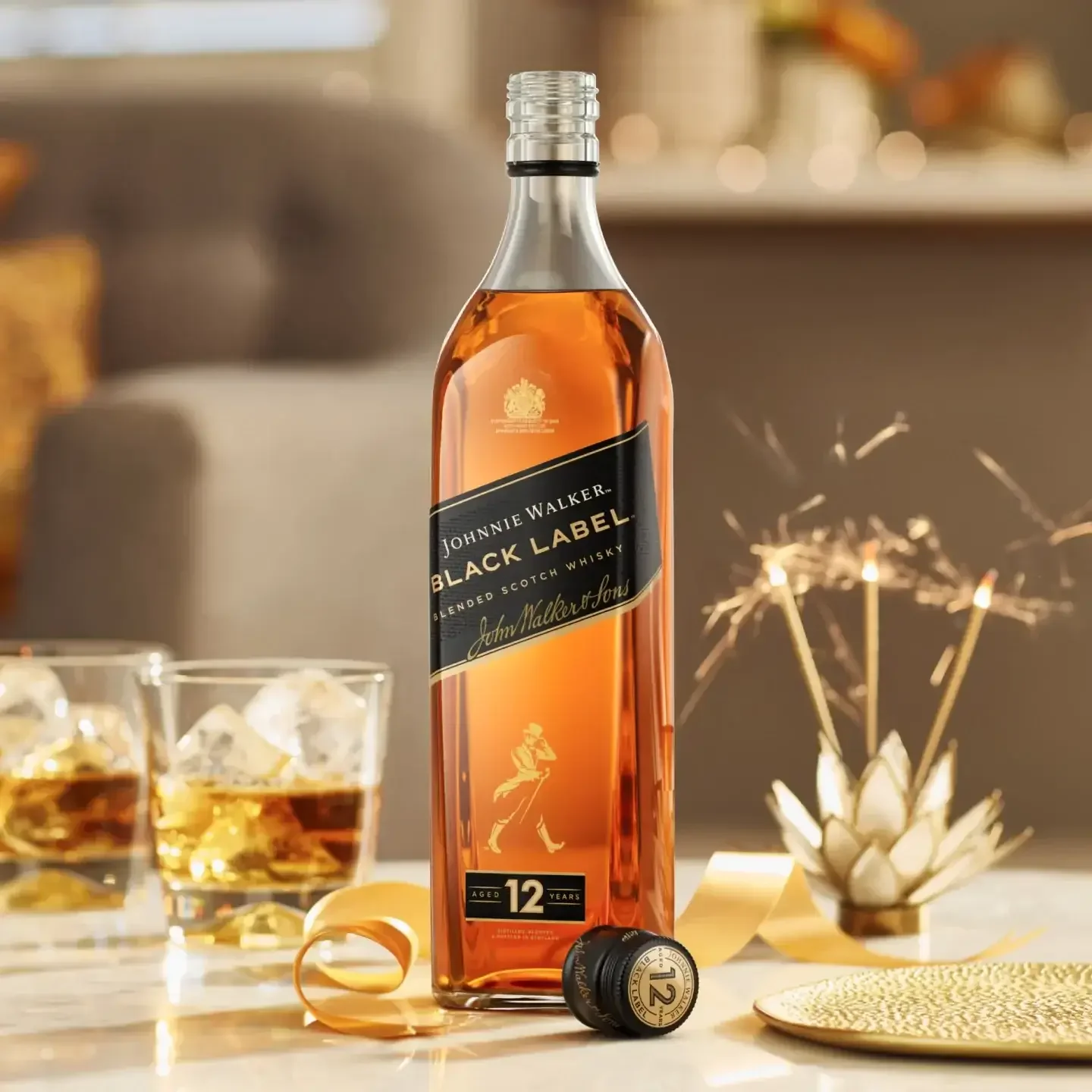
they made it official.Red Label.
Black Label.Adopted from behavior.
Johnnie Walker built a blending philosophy.
And that philosophy
created something more powerful
than product variation.It created a standard
people could learn and rely on.____
Here’s where most alcohol brands fail.
They assume consumption
is enough.Johnnie Walker understood something deeper:
If whisky tasting is the hobby,
you need places
where people can practice it.So they built them.
Start with the
Johnnie Walker Princes Street.
This isn’t a typical brand tour.
It’s a guided journey
through flavor.Visitors walk through history.
They are shown their flavor profile.
They get access to bars and dining found inside.
They learn how different blends
express different profiles.Then come the guided tastings.
Structured sessions
that teach people how to identify:– Aroma
– Texture
– FinishThis is skill-building.
Not sampling.
And then there’s
The Vault.
A private blending experience.
High-end.
Personalized.Where participants create
their own custom blend.This is the highest level of engagement.
You don’t just taste whisky.
You understand how it’s built.
Now, for where the magic really happens.
Johnnie Walker doesn’t just show you the final blend.
They take you upstream—
to the sources.The four distilleries
These sites are considered the foundational,
geographic "corners" of Scotland
that supply regional differences and key components
to Johnnie Walker’s blends.Each one offers tours.
Not generic ones.
Contextual ones.
This does something critical.
It breaks the blend apart.
So customers can rebuild it
in their mind.Now the blend isn’t abstract.
It’s understood.
And once you understand something,
you respect it differently.
These hobby-driven experiences create a return loop:
Learn how to taste.
Experience the difference.
Associate that clarity with the brand.
Return to refine your palate.
Most brands rely on habit: Drinking.
Johnnie Walker builds competence.
And competence creates attachment.
CLOSING VERDICT — FORCE THE CHOICE (1–2 minutes)
Here’s the decision Johnnie Walker made
that others avoid.They taught customers
how to evaluate the product.Not just consume it.
They risked something.
Because once people learn to taste properly,
they become more selective.
More critical.
Harder to impress.
Most brands avoid that.
They don’t want to be tested.
Johnnie Walker leaned into it.
Because educated customers
don’t drift easily.They return
to what they understand.You can sell a drink.
Or you can show them how to drink.
One creates transactions.
The other creates loyalty.
____
If loyalty disappears when the bottle is finished,
it was never loyalty.Give customers a reason to return:
hobby-driven experiences that make them feel alive.
Explore more
Globally admired brands are extending beyond the products they make. We at Forms of Recreation help discover handpicked spaces designed for refined hobbyists like you.