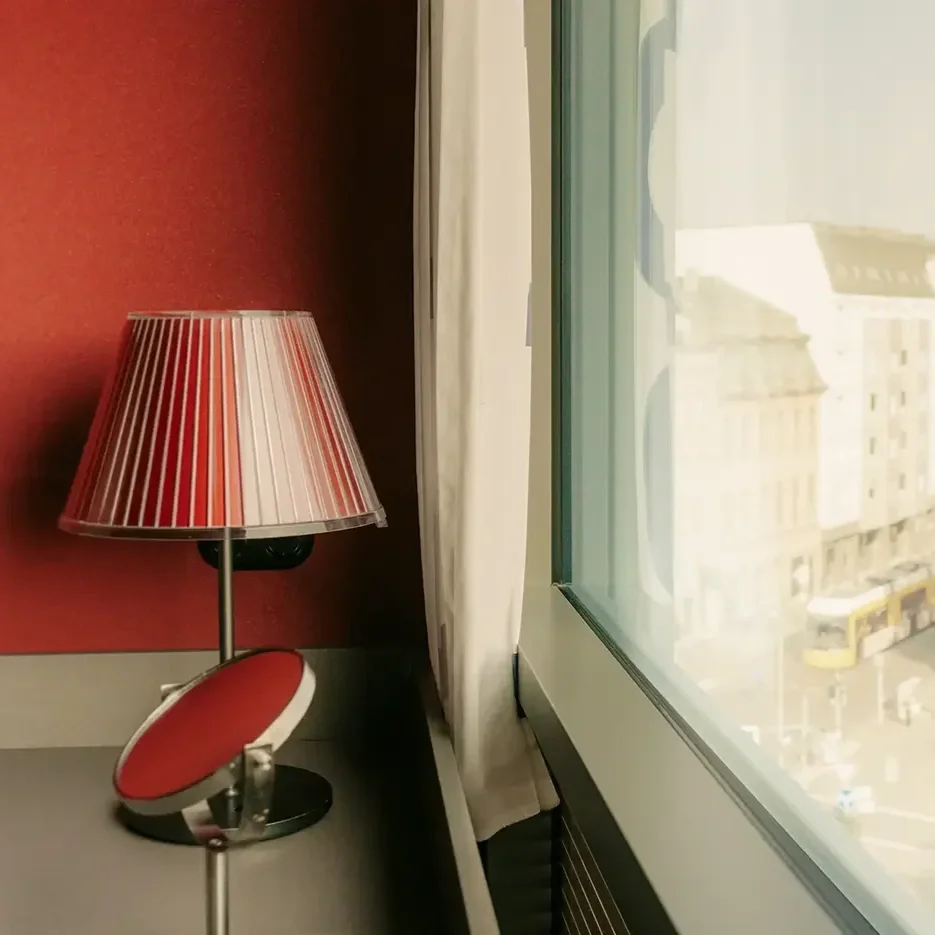
#49. Spaces For City Walkers → Strategy Used by Camper®
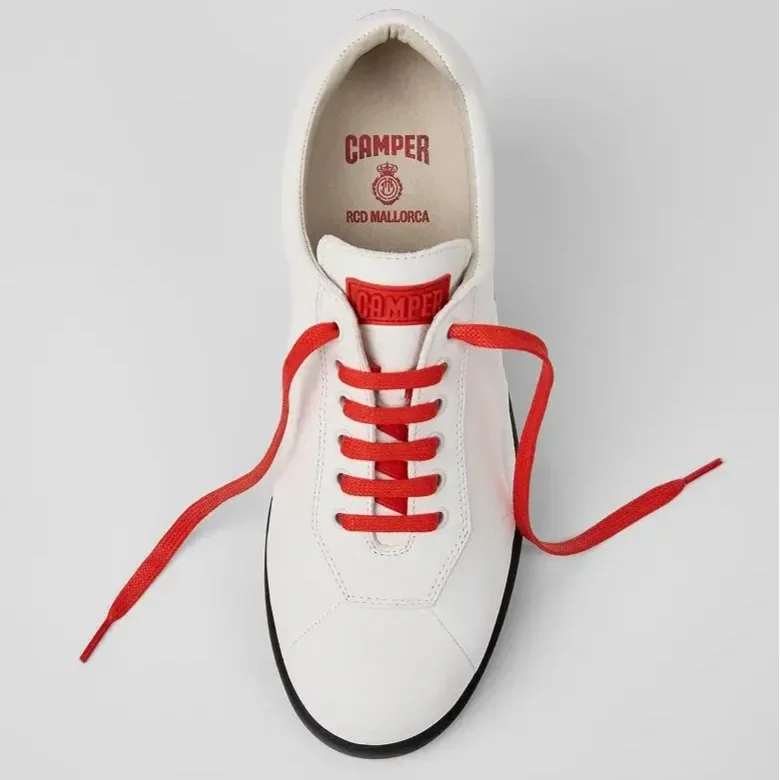
Listen to the customer retention strategy used by Camper®.
Are you part of a marketing team? You’ve probably heard of Camper, the shoe manufacturer founded in Spain in 1975.
Listen to host André Brathwaite share the backstory of Camper, founded by Lorenzo Fluxà, and how he turned his passion for shoemaking into a lasting brand that uses a customer retention strategy: hobby-driven experiences, including a club called The Walking Society, places such as Casa Camper in walkable cities such as Barcelona and Berlin, and hobby-driven activities such as their Walk, Don't Run challenge in partnership with Strava.
The opinions expressed are solely those of Forms of Recreation and do not necessarily reflect the views of any brand mentioned. We encourage you to check their corresponding websites for further information.
-
Episode 49
Experiences For City Walkers → Strategy Used by Camper®
____
Most footwear companies compete on speed.
Performance.
Athleticism.
Technology.
Camper built something different.
They built around slowing down.
Because walking is one of the few hobbies
people already practice every day—
without fully noticing it.
Yet, Camper understood something.
If movement through a city
is a form of recreation,
you don’t just sell footwear,
you embed your brand into how people experience a hobby.
That decision didn’t just create customers,
it supported a community of people who associate walking itself
with curiosity, presence, and discovery.
Because when people feel supported,
they keep returning to the brands
that helped them better appreciate the world they live in.
____
Close your eyes.
Picture a city early in the morning.
The streets are quieter than usual.
Shops are still opening.
Cars are rarely passing.
So for once,
you stop rushing.
And you start noticing details.
Someone is having a phone conversation.
Someone else is walking a dog.
You have nowhere urgent to be.
Walking changes when it stops being about commuting
And starts being about observing.
Over time,
it becomes more than exercise,
a relationship with the city itself.
The park you accidentally discovered.
The café you found because you were not in a hurry.
The nearby music you heard
because you chose to be present.
That belief—
that walking through cities can become a recreational practice,
not just a commute—
is exactly what Camper built around.
____
Antonio Fluxà was born in 1853 in Mallorca, Spain,
And at a young age, he wanted to be a shoemaker.
So, he took a trip to England to get educated.
There, he encountered industrial shoemaking machinery,
and returned with the island's very first sewing machine,
sparking an industrial shift in Mallorcan footwear.
In 1877,
he opened a small workshop under the name Lottusse,
gathered talented shoemakers from across Mallorca,
and slowly built one of Spain’s major footwear businesses.
Years later,
Antonio’s grandson, Lorenzo Fluxà,
grew up inside that world.
Around machinery,
materials,
workers,
and shoemaking methods.
Eventually,
the Fluxà family divided the business empire
between Antonio’s three grandsons
to avoid future infighting.
One inherited Lottusse.
Another inherited the family tourism business, which eventually became Iberostar.
And the last grandson? Lorenzo? decided to build something entirely his own.
The global footwear industry was changing rapidly.
Athletic brands were growing.
Shoes were increasingly designed around performance,
Lorenzo saw a different opportunity.
He believed modern life had disconnected people
from the simple pleasure of walking.
He created a brand called Camper in 1975.
The name itself means “country person” in Catalan—
a reference to Mallorca’s rural traditions
and slower Mediterranean lifestyle.
And Camper’s very first shoe reflected that philosophy directly.
The Camaleón.
Inspired by the footwear worn by local farm workers in Mallorca,
who often could not afford expensive footwear,
So, practicality shaped their shoes.
That inspired its design:
a simple shoe crafted from recycled car tires
and canvas scraps.
Lorenzo combined generations of shoemaking knowledge
with unconventional design.
Shoes that looked different from almost everything else on the market.
But the philosophy underneath mattered more.
Camper wasn’t trying to help people move faster.
It was trying to make movement more enjoyable.
That one thought shaped the entire brand.
This creates a very different relationship between customer and product.
Their shoes are no longer just functional.
It becomes part of how someone experiences daily life.
____
Here’s what Camper understood early:
If walking is the hobby,
you need more than stores.
You need experiences surrounding walking itself.
So they built it.
First: The Walking Society.
A cultural platform built entirely around walking.
City guides.
Printed magazines.
Interviews.
Photography.
Local recommendations.
Observations about architecture,
food,
music,
and neighborhood life.
Then came Casa Camper.
Hotels designed around walkable cities
like Barcelona and Berlin.
Again,
this was strategic.
But, Casa Camper hotels are not just hotels.
They reinforce exploration.
Guests are encouraged to experience cities on foot.
To wander.
To discover neighborhoods gradually.
To participate in local culture instead of rushing through it.
Then come the activities.
Camper’s “Walk, Don’t Run” philosophy appears repeatedly across campaigns,
events,
and collaborations.
Including walking challenges in partnership with Strava.
That phrase matters.
Because “Walk, Don’t Run”
is not simply advice about speed or pace.
It is a rejection of constant urgency.
It also gives customers something much deeper than footwear,
it gives them a worldview.
This creates the return loop:
People slow down and walk more intentionally.
Walking creates emotional connections internally and externally.
Those experiences become associated with Camper’s philosophy.
Customers return because the brand reflects how they choose to move through life.
Most footwear brands promote future aspirations.
Camper promotes everyday experiences.
And everyday experiences create unusually durable loyalty.
Because people repeat rituals, like walking, thousands of times.
____
Here’s the decision Camper made
that many shoe brands still avoid.
They built around ordinary behavior.
Walking.
Not extreme performance.
Not elite competition.
Not speed.
And that turned out to be powerful.
Because the most sustainable hobbies
are often the ones already integrated into daily life.
Camper understood that if you help people enjoy ordinary moments more deeply,
they return naturally.
That means that you can sell footwear as seasonal fashion,
or you can become part of how people experience
everyday movement.
OUTRO LINE (CONSISTENT ACROSS EPISODES)
If loyalty disappears when the shoes come off,
it was never loyalty.
Give customers a reason to return:
hobby-driven experiences
that makes people feel alive.
Explore more
Globally admired brands are extending beyond the products they make. We at Forms of Recreation help discover handpicked spaces designed for refined hobbyists like you.