#45. Spaces For Driving Enthusiasts → Strategy Used by Porsche®
Listen to the customer retention strategy used by Porsche®.
Are you part of a marketing team? You’ve probably heard of Porsche, the car manufacturer founded in Germany in 1931.
Listen to host André Brathwaite share the backstory of how founder Ferdinand Porsche turned his passion into a lasting brand that uses a customer retention strategy: hobby-driven experiences, including clubs (Porsche Clubs Worldwide and Porsche GT Circle), places (Porsche Experience Centers and Porsche Museum), and activities (Porsche Travel Experience, Porsche Track Experience, Porsche Ice Experience, and Porsche Roads).
The opinions expressed are solely those of Forms of Recreation and do not necessarily reflect the views of any brand mentioned. We encourage you to check their corresponding websites for further information.
-
Episode 45
Experiences For Driving Enthusiasts → Strategy Used by Porsche®
____
Most car companies compete on specs.
Horsepower.
0 to 60.
Top speed.Porsche took the road less travelled.
They didn’t just build fast cars.
They built better drivers.
Why?
If owning a car is just a means of transportation,
you see it as a commodity.But if driving a car becomes part of your identity.
You don’t switch brands lightly.
That decision didn’t just sell cars.
It built customer retention.
Because people don’t return to an engine with four wheels.
They return to the feeling
a car gives them when they drive it.____
Picture an empty road.
In the fall.
You woke up early this Sunday morning.
No traffic.
No distractions.
Just you,
the steering wheel,The sound of the engine,
and the next corner.You approach.
Brake lightly.
Turn in.
Feel the weight shift.
Then accelerate out.
Nice.
Driving doesn’t have to be
about getting somewhere.It can be about how you get there.
You start noticing things.
Corner entry.
Throttle control.
Road texture.
How you hesitate.
How you wish to improve.
Does this sound like commuting to you?
Once you experience driving this way,
you don’t go back
to seeing a car as a means of transport.You seek roads
where you can practice what you’ve learned.and seek cars
that respond to it.That belief—
that driving is an experience, not a chore—is exactly how Porsche was built.
____
Born in 1875
in what is now the Czech Republic,
Ferdinand Porsche grew up in his father’s metalworking shop.
But metal wasn’t what interested him most.
He was all about the emerging technology: electricity.
His father considered electricity "nonsense"
and forbade him from tinkering with it.
What did Ferdinand do?
Set up a secret workshop in the family's attic
to conduct experiments with batteries.
At age 13, he installed electric doorbells at his parents' house,
and at 16, he added electric lighting,
making it the first home in the village to have them.
By his early twenties,
he was already designing electric wheel-hub motors,
placing power directly into the wheels themselves.
Remember, this was still the late 1800s.
This was radical at the time.He went on to work with companies like Lohner and Daimler,
building some of the earliest hybrid vehicles.Later, he was asked to design a “people’s car”—
what would become the Volkswagen Beetle.
One of the most successful and influential vehicles in automotive history.
It is Ferdinand’s son, Ferry Porsche,
who took his father’s engineering philosophy
and applied it to something else:A sports car.
Early development of the Porsche 356 took place while Ferdinand
was imprisoned in France for nearly 2 years
following his involvement in WWII.
Ferry managed the company
and used the profits from other design contracts
to eventually pay his father's bail.
In 1948, the Porsche 356 was born.
A collaborative achievement involving both father and son.
Ferry’s dream. Ferdinand’s technical ability.
Lightweight.
Responsive.
Built for driving,
not just owning.This is where we can see the pattern:
From electric experiments
to hybrid systems
to performance cars.Ferdinand Porsche wasn’t building transportation.
He was building experiences that were tied to driving.
Which set up everything that followed.
Because once a car requires the intention to drive it,
you don’t just sell it.
You have to support the person driving it.
____
Ok, here’s what most automotive brands miss:
If driving is the hobby,
you need clubs, places, and activities
to stick with it.Porsche built all three.
First: community.
Through Porsche Clubs Worldwide.
Hundreds of clubs.
Global reach.
Local chapters.
Owners don’t just buy cars.
They join groups.
And drive together.
Then there’s Porsche GT Circle.
A more focused community
for high-performance driving enthusiasts.Track access.
Private events.
Direct connection to the brand.
This isn’t ownership.
It’s participation.
Then: Places
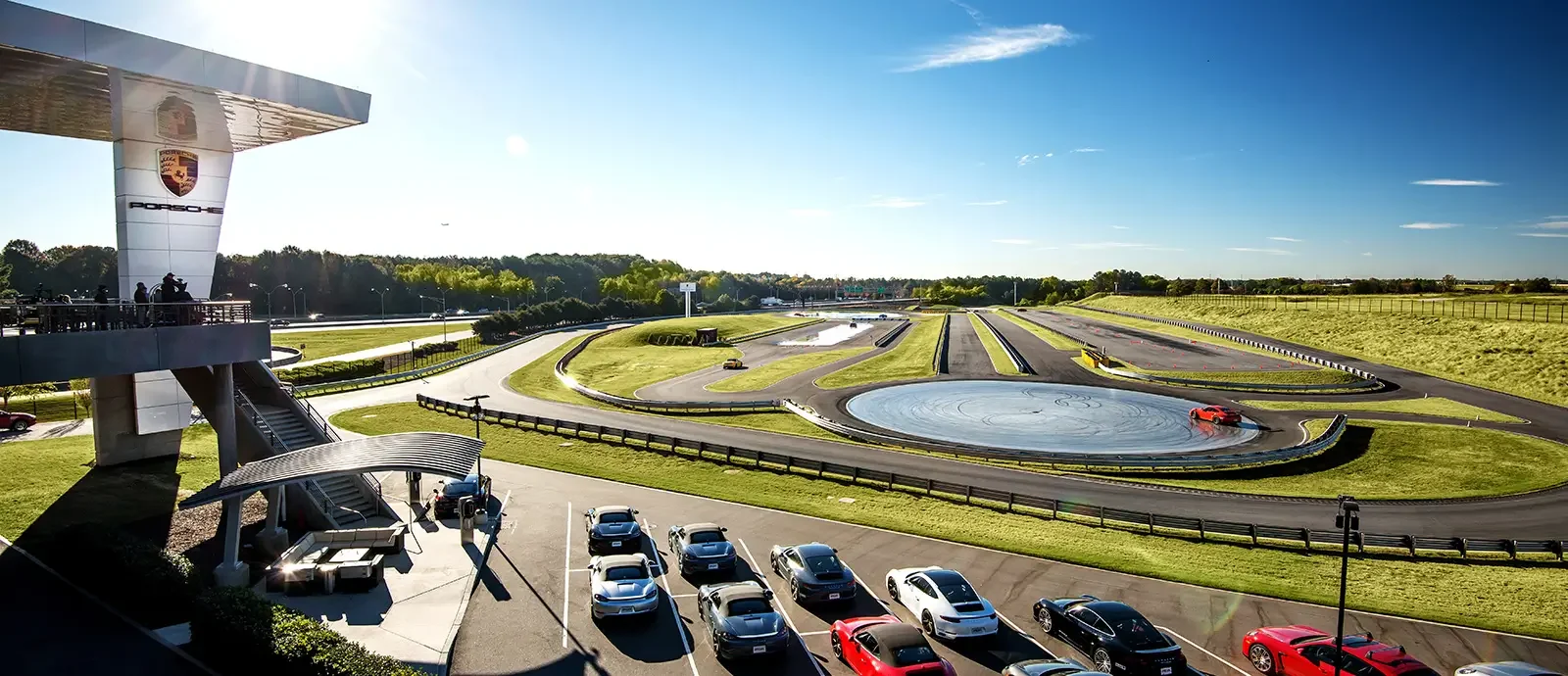
Porsche Experience Centers.
Controlled environments in 10 locations around the world
where drivers can push limits safely.
Instructor-led sessions.
You don’t imagine performance.
You feel it.
How about the Porsche Museum?
Not just history.
A reinforcement of identity.
A place where legacy is visible.
Then come the activities.
Porsche Track Experience.
Learn control at speed.
Refine technique.
Build confidence.
Porsche Travel Experience.
This is when a tour guide, a travel itinerary,
and a Porsche are waiting for you upon arrival.
Breathtaking landscapes to drive through,
exclusive hotels to stay at,
and renowned restaurants to dine in.
Porsche Ice Experience.
At the Porsche Arctic Center in Finland,
you will experience extreme conditions.
Get ready for low grip and high precision.
And then something designed for convenience:
Porsche Roads.
A digital tool that helps you find
the right roads for your driving style
anywhere in the world.It also helps you connect with other like-minded drivers,
Making it easy to meet up and enjoy a sense of belonging
on and off the road.
Showing that driving doesn’t have to depend on events.
If the brand creates the environment, it can be self-initiated.
Anytime.
Anywhere.
All of this creates a loop:
You learn to drive properly.
You experience what the car can actually do.
You associate that performance with the brand.
You seek more opportunities to improve.
You return—because all of this compounds.
Most car brands rely on new car models.
Porsche builds on levels of interest in the hobby.
____
Here’s the decision Porsche made
that most automotive brands avoid.They built for drivers
who want to get better.Not just arrive faster.
They invested in:
Clubs.
Tracks.
Experiences.
Routes.
Education.
Most brands train customers
to compare models.Porsche trains customers
to refine skill.And once someone identifies themselves as a driver—
not just a car owner—
they protect that identity.
This is what builds customer retention.
____
If loyalty disappears when the car needs repairs,
it was never loyalty.Give customers a reason to return: hobby-driven experiences that make people feel alive
Explore more
Globally admired brands are extending beyond the products they make. We at Forms of Recreation help discover handpicked spaces designed for refined hobbyists like you.